How we reconstruct an animal
1. Start with the species
We do not put a generic feather coat on every dinosaur. Skin covering, proportions, posture, hands, feet, and habitat are researched species by species. A 2024 study of preserved Psittacosaurus skin, for example, found reptile-type scales in non-feathered regions. That is exactly why one rule cannot fit every dinosaur.
2. Label certainty
Direct fossil evidence is described as evidence. Closely supported anatomy is described as reconstruction. Colors and patterns are called artistic choices unless pigment evidence exists for that specimen or a defensible close comparison.
3. Keep films out of it
Our artwork does not reproduce a movie silhouette, franchise character, licensed logo, or another artist’s composition. The real animals are interesting enough.
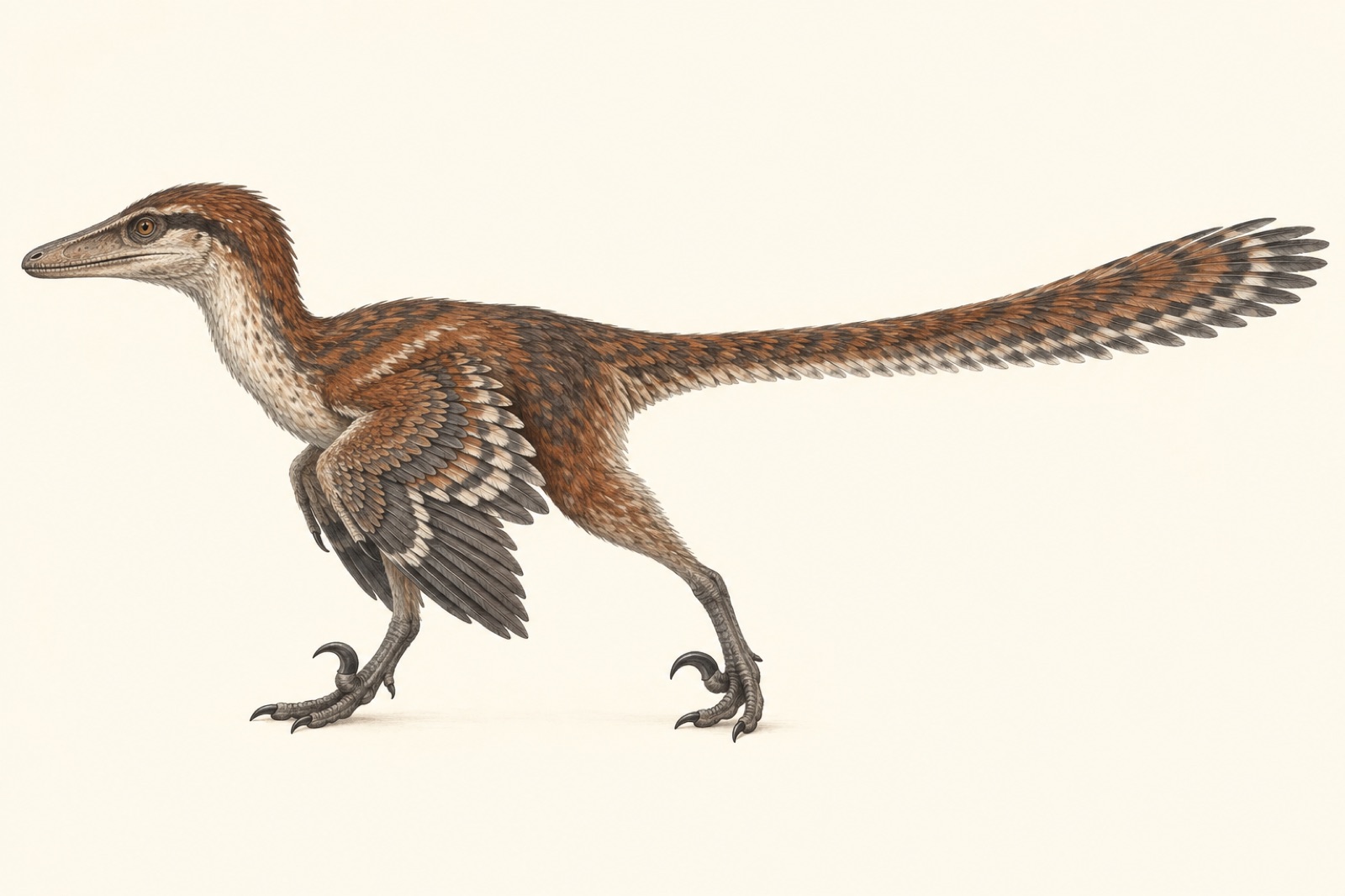
Velociraptor, Field Note 001
The American Museum of Natural History describes Velociraptor as small, feathered, and flightless, with bird-like ankles, wrists, feet, and a wishbone. The rust, charcoal, and buff plumage in our first study is an artistic reconstruction, not a claim about known color.
Sources
- American Museum of Natural History: Velociraptor
- Natural History Museum: reconstructing dinosaurs from evidence
- Nature Communications, 2024: preserved dinosaur skin microstructure
This is educational brand content, not peer review. Scientific collection artwork should receive an outside paleontology review before production.